Equator-500s' Optimization, Digitalization & Integration in Soft Machining
Automating aerospace metrology with sensor-driven gauging and data integration.

Project Context
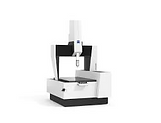
This project focuses on automating and optimizing the performance of the Renishaw Equator-500 gauging system during a mechanical engineering internship at Schaeffler Aerospace. The initiative aimed to enhance metrology workflow, reduce manual input, and streamline inspection cycles on the production floor.
The primary goal was to improve the speed, accuracy, and repeatability of the Equator-500 system while increasing its integration within a live aerospace manufacturing environment. The project also aimed to build a robust data foundation for long-term scalability and operator independence.
System Tools & Software Used
The system optimization was achieved through a combination of tools, including MODUS1 for metrology programming, PC-DMIS, SQL databases, Python, and C++ scripting on Pycharm, and VBA automation to connect data between machines and analysis dashboards.


Automation Design & Implementation
The Equator-500's routine processes were streamlined through automated part programs, error handling logic, and a custom-built SQL-VBA reporting system. This enabled real-time pass/fail tracking and reduced the need for manual data logging.



Training & Documentation
A key outcome was the deployment of technical training across departments, accompanied by the creation of detailed SOPs, work instructions, and troubleshooting guides using Office 365 and SAP. This improved interdepartmental understanding and minimized operator dependency.


Engineering Analysis & Quality Control
Analytical methods, such as Gage R&R, Cp/Cpk, and Gauge Linearity studies, were performed to validate system consistency. These metrics informed iterative improvements in probe paths, cycle timing, and repeatability targets.

Performance Results
The system’s overall performance was improved by 33%, while cross-functional workflow efficiency increased by 20%. Inspection time was significantly reduced, and the system could now function with minimal human intervention, resulting in a faster turnaround. With such impressive performance and optimization potential, the project will grow with the help of MAZAK, as a designated cell for Soft Machining is more feasible then Day 1.
Challenges & Problem Solving
Challenges included probe drift, software integration bugs, and data inconsistencies. These were addressed through root cause analysis, feedback loops with operators, and refining the SQL data mapping between machines and production tracking systems.

Conclusion
This project showcased the value of automation in aerospace metrology, demonstrating how technical problem-solving, data systems, and interdisciplinary collaboration can significantly increase shopfloor performance and quality assurance outcomes.